


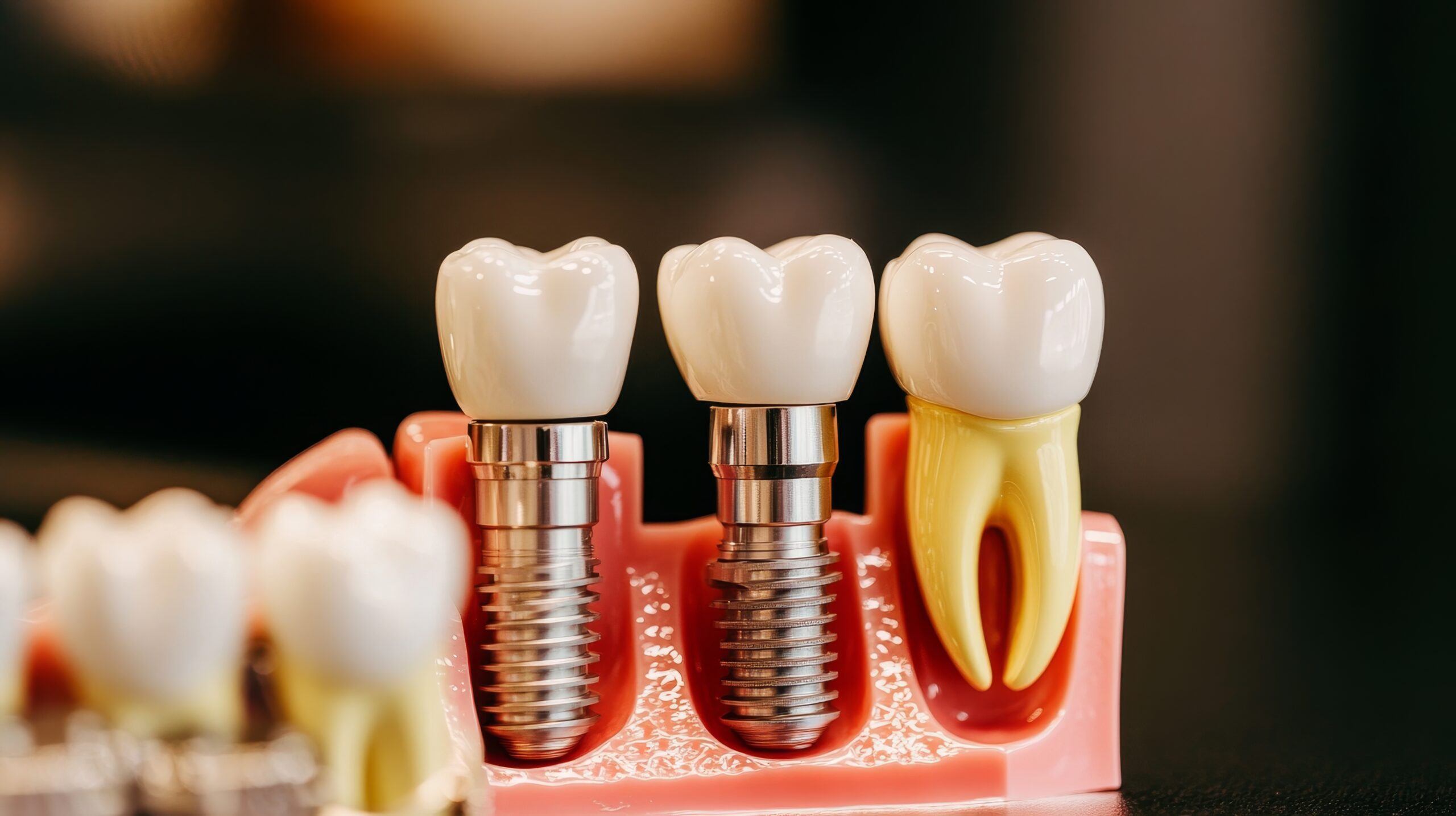
Dental Implants & Implant-Supported Restorations
Advanced implant solutions designed to replace missing teeth with maximum stability, natural aesthetics, and long-term performance.
Specifications
- Material Options: Titanium, Zirconia
- Restoration Types: Single, Bridge, Full Arch
- Abutments: Custom CAD/CAM
- Precision: Micron-level fit
- Application: Permanent tooth replacement
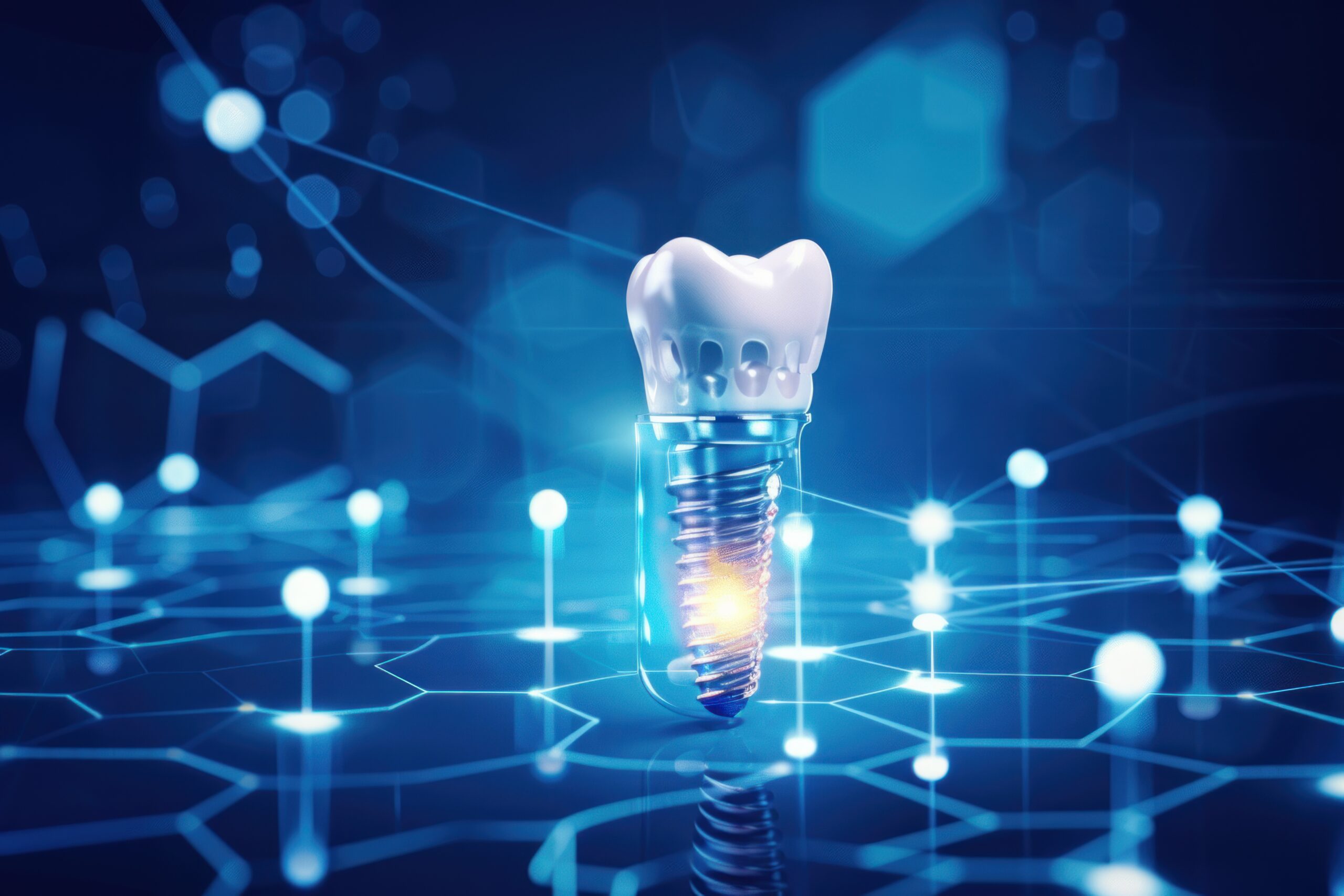
The Science of Dental Implants
- Implants function as artificial tooth roots placed in jawbone
- Osseointegration bonds implant with bone for stability
- Supports crowns, bridges, or full arch restorations
- Prevents bone loss and preserves facial structure
- Restores natural chewing efficiency
Types of Implant Restorations
- Single Implant Crown
- Implant-Supported Bridge
- Full Arch (All-on-4 / All-on-6)
- Implant Overdentures
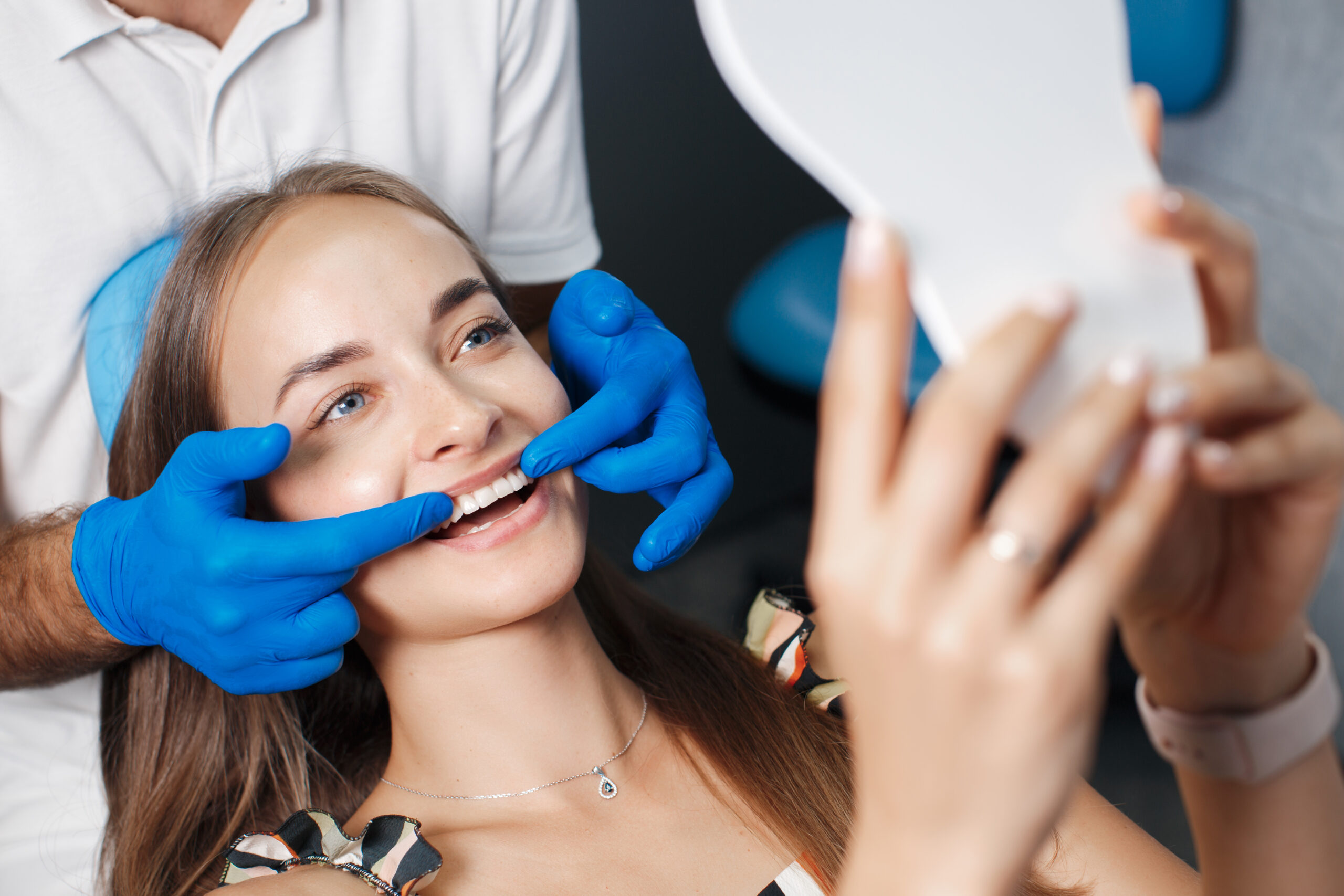
Clinical Outcome & Aesthetics
Implant restorations are designed to closely replicate the function and appearance of natural teeth. With proper planning and execution, they provide exceptional stability, allowing patients to regain full chewing efficiency and confidence in their smile. Advanced ceramic materials and digital design techniques ensure that each restoration blends seamlessly with adjacent teeth, delivering lifelike translucency, contour, and color matching. The result is a restoration that is both functionally reliable and aesthetically indistinguishable from natural dentition.
- Natural look and feel
- High stability and comfort
- Improved chewing efficiency
Technical Advisory
Successful implant restorations depend on precise coordination between surgical placement, prosthetic design, and material selection. Implant angulation must be carefully planned to ensure optimal load distribution and avoid excessive stress on surrounding bone structures. Inadequate positioning can lead to complications such as screw loosening, prosthetic misfit, or long-term implant failure. It is essential to maintain sufficient bone volume and density prior to placement, as these factors directly influence osseointegration and stability. Occlusal planning should be meticulously executed to prevent overload, particularly in posterior regions where bite forces are significantly higher. Additionally, the choice of material—whether titanium for strength or zirconia for aesthetics—should align with both functional demands and clinical indications. A digitally guided workflow, combined with precise laboratory fabrication, is strongly recommended to achieve predictable, long-term outcomes while minimizing biological and mechanical complications.

