


Product overview
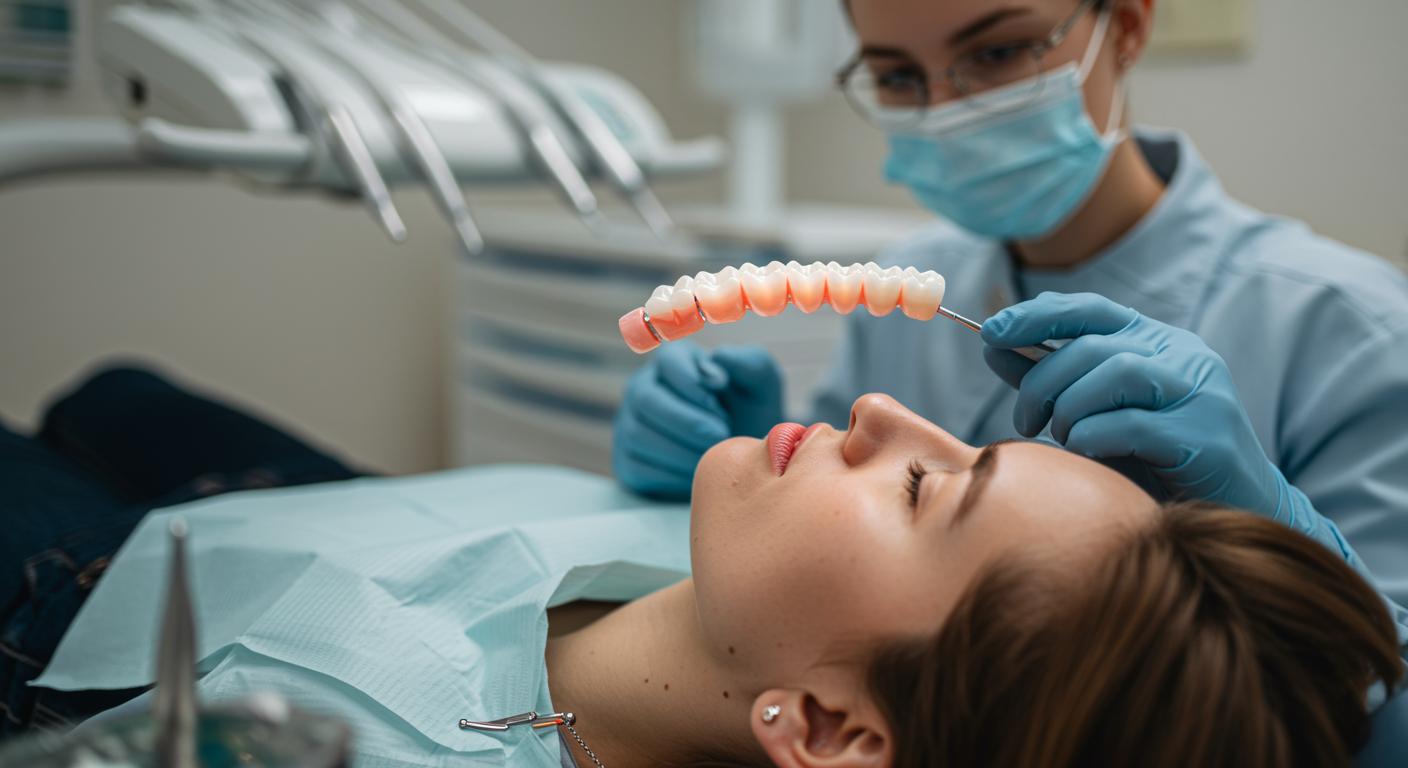
The Cantilever Dental Bridge is a fixed prosthetic restoration used to replace a missing tooth when there is a natural tooth (abutment) on only one side of the gap. Unlike a traditional bridge which requires support on both sides, the cantilever design anchors to a single adjacent tooth — making it ideal for specific clinical situations, particularly in the anterior region.
Fabricated using high-strength zirconia or porcelain-fused-to-metal (PFM), our cantilever bridges are precision-milled with CAD/CAM technology to ensure superior fit, natural aesthetics, and long-term durability.
- Single abutment support Anchored to one healthy adjacent tooth no need to grind both neighbours.
- Natural aesthetics VITA shade-matched zirconia crown blends seamlessly with surrounding teeth.
- Minimally invasive Only one tooth is prepared, preserving more of your natural tooth structure.
What is a cantilever dental bridge?
Definition & concept
A cantilever bridge in dentistry is a type of fixed dental prosthesis where the artificial tooth (pontic) is supported by one or more crowns on only one side, rather than on both sides. The term “cantilever” comes from structural engineering — just as a balcony projects outward from a single wall, the pontic projects from a single anchor crown.
How it differs from a traditional bridge
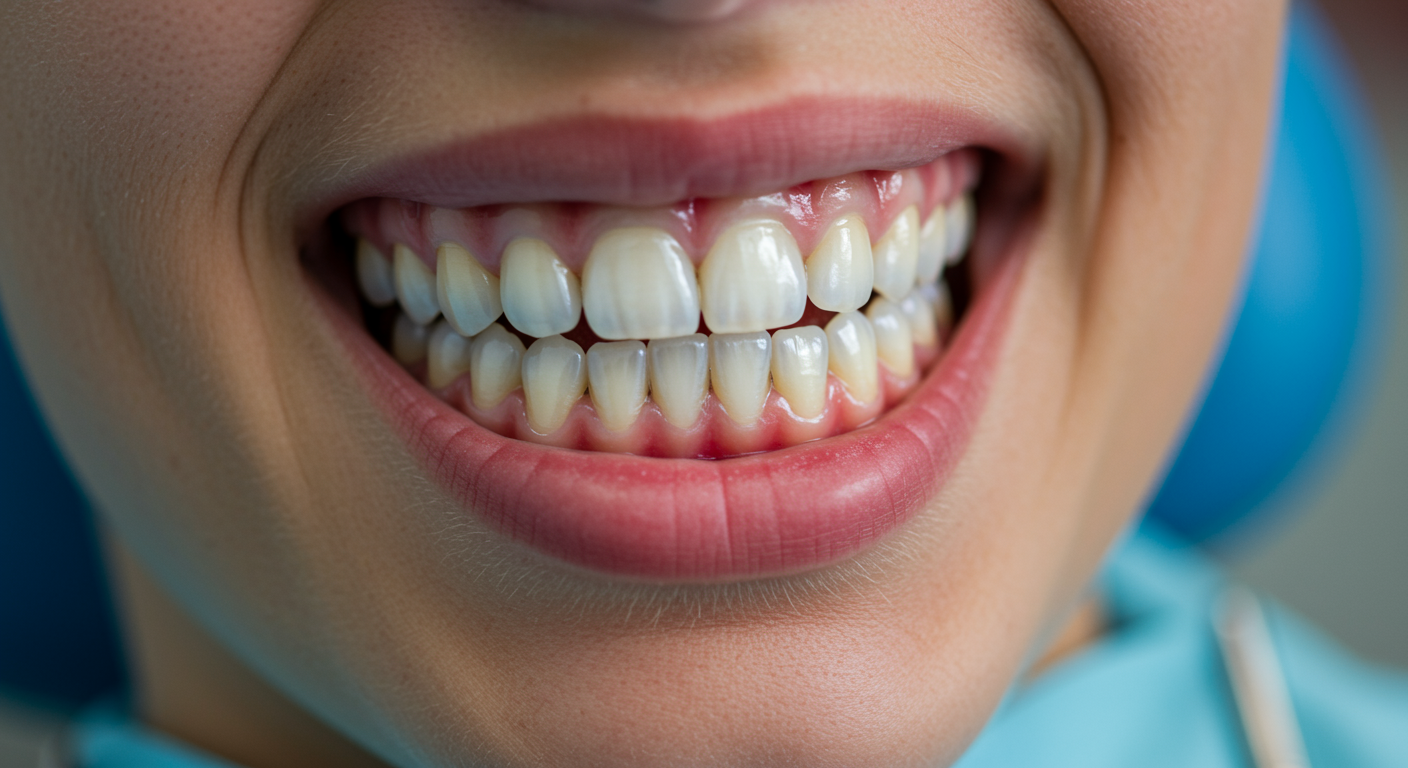
A traditional (conventional) bridge requires healthy teeth on both sides of the gap to support the pontic. In contrast, a cantilever bridge uses only one side. This makes it the preferred option when:
- Only one natural tooth is available next to the gap
- The adjacent tooth on one side has already been crowned
- The missing tooth is at the end of the dental arch (e.g., upper lateral incisor)
- The patient wants to avoid preparing an untouched tooth unnecessarily
Types of cantilever bridges
Cantilever bridges are available in different materials depending on the patient’s aesthetic needs, bite force, and budget.
Zirconia cantilever bridge
Strongest and most aesthetic option. Tooth-coloured, metal-free, and highly biocompatible. Ideal for front teeth.
Lifespan: 12–15+ years
PFM bridge (porcelain-fused-to-metal)
Metal substructure with ceramic overlay. Good strength and acceptable aesthetics at a lower price point.
Lifespan: 10–12 years
All-ceramic / e.max
Lithium disilicate pressed ceramic. Excellent translucency for front teeth. Requires minimal prep.
Lifespan: 10–15 years
Maryland cantilever bridge
A Maryland bridge (also called a resin-bonded bridge) is a conservative variation where the pontic is attached to a metal or ceramic wing that is bonded to the back of an adjacent tooth requiring no crown preparation at all. It is most commonly used for replacing upper front teeth in younger patients.
- Advantage: Completely preserves the abutment tooth
- Limitation: Not suitable for high bite-force areas (molars)
- Best for: Anterior (front) teeth — upper lateral incisors especially
Key features & specifications
| Feature | Detail |
|---|---|
| Product name | Cantilever Dental Bridge - Fixed Prosthesis |
| Material options | Zirconia, PFM, e.max (lithium disilicate), All-ceramic |
| Number of units | 2-unit (1 crown + 1 pontic) or 3-unit |
| Shade system | VITA Classical A1–D4 / VITA 3D-Master |
| Fabrication method | CAD/CAM milling — 5-axis precision |
| Fit accuracy | Marginal gap ≤ 80 microns |
| Surface finish | Polished zirconia / glazed ceramic |
| Biocompatibility | ISO 10993-certified, metal-free option available |
| Sterilisation | Autoclave-safe, delivered sterile |
| Warranty | 2 years against manufacturing defects |
Procedure - step by step
What happens during treatment?
The cantilever bridge procedure typically takes 2–3 dental visits over 2–3 weeks. Here is what to expect:
1. Consultation & X-ray assessment
Your dentist evaluates the health of the abutment tooth, bone density, bite, and confirms a cantilever bridge is the right choice for your case.
2. Tooth preparation
The abutment tooth is gently shaped (reduced) to accommodate the crown. A local anaesthetic ensures the procedure is comfortable.
3. Digital impression or scan
A digital intraoral scan (or conventional impression) captures the exact dimensions of your teeth and bite for the dental lab.
4. Temporary bridge placement
A temporary acrylic bridge is placed to protect the prepared tooth while your permanent bridge is fabricated in the lab (7–10 days).
5. Final fitting & cementation
The permanent bridge is tried in, checked for fit, colour, and bite, then permanently cemented with dental adhesive cement.
6. Follow-up review
A review appointment at 2 weeks ensures comfort, proper occlusion, and optimal gum health around the new bridge.
Care & maintenance
How to care for your cantilever bridge
With proper care, a zirconia cantilever bridge can last 12–15 years or longer. Follow these guidelines to maximise the life of your restoration:
Daily hygiene
- Brush twice daily with a soft-bristle toothbrush
- Use floss threaders or interdental brushes to clean under the pontic
- Consider a water flosser (oral irrigator) for thorough under-bridge cleaning
- Use non-abrasive fluoride toothpaste - avoid whitening pastes
Foods to avoid
- Hard foods - ice, hard candy, unpopped popcorn kernels
- Sticky foods chewing gum, caramel, toffee
- Biting directly into very hard fruits or crusty bread with front bridge
Regular dental visits
Visit your dentist every 6 months for professional cleaning and to check the bridge’s fit, cement integrity, and the health of the abutment tooth and gums.
Frequently asked questions
1. Is a cantilever bridge painful to get?
Ans. The procedure is performed under local anaesthesia, so you will not feel pain during the preparation. Some sensitivity or mild discomfort after the appointment is normal and resolves within a few days.
2. How long does a cantilever bridge last?
Ans. A zirconia cantilever bridge typically lasts 12–15+ years with good oral hygiene and regular dental checkups. PFM bridges last around 10–12 years.
3. Is a cantilever bridge better than a dental implant?
Ans. Implants are generally the gold standard for tooth replacement, but they require surgery, a longer timeline, and higher cost. A cantilever bridge is a valid, non-surgical alternative especially when one side has a strong natural tooth already crowned, or when implants are not possible due to bone loss.
4. Can a cantilever bridge replace a molar?
Ans. Generally not recommended for molar replacement. The high bite forces in the back of the mouth create excessive lateral stress on a single abutment. Traditional bridges or implants are preferred for posterior (back) teeth.
5. Will it look natural?
Ans. Yes. Zirconia bridges are shade-matched to your surrounding teeth using the VITA shade guide. The ceramic surface mimics the translucency of natural enamel, making the restoration virtually indistinguishable.

