


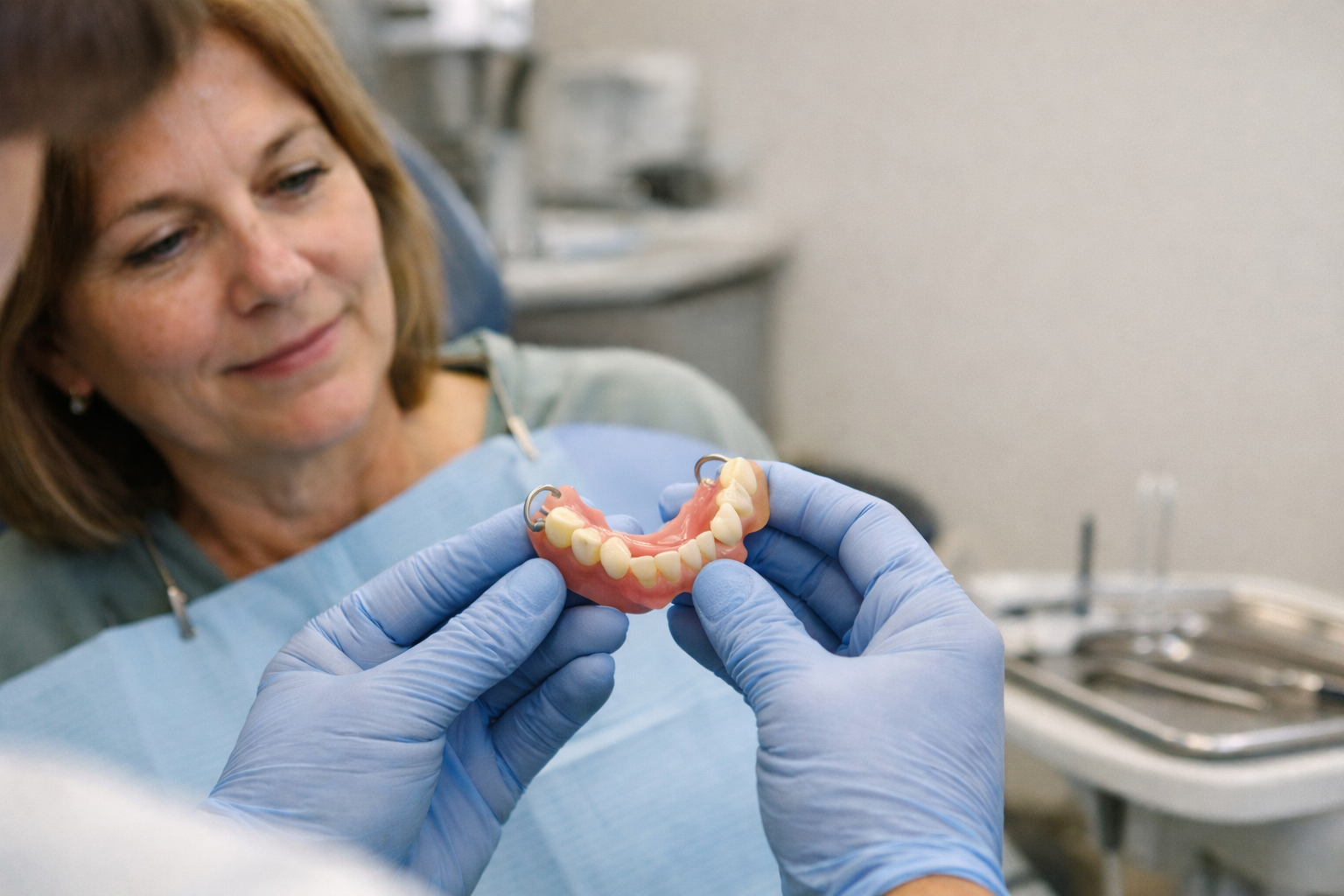
Product Overview
Partial dentures are removable dental prostheses designed to replace one or more missing teeth while preserving the remaining natural teeth.
They are a practical and cost-effective solution for patients who are not candidates for implants or fixed bridges, offering restored function and improved aesthetics without invasive procedures.
Our partial dentures are crafted with precision and comfort in mind:
- CAD/CAM-assisted design for accurate fit
- Lightweight frameworks (metal or flexible polymer)
- Natural-looking prosthetic teeth with gum-colored base
- Custom clasp or flexible retention systems for stability
What Are Partial Dentures?
Definition & Concept
A partial denture is a removable appliance that replaces missing teeth by attaching to the remaining natural teeth using clasps or precision attachments.
It restores both function and appearance while maintaining proper alignment of existing teeth.
Functional flow:
Missing teeth → Partial denture designed → Appliance placed in mouth → Gaps filled and function restored
When Are Partial Dentures Needed?
Partial dentures are recommended in the following situations:
- One or more missing teeth in different areas
- Remaining teeth are healthy but insufficient for a bridge
- Patients not suitable for implant treatment
- Need for an affordable tooth replacement option
- Prevention of shifting of adjacent teeth
- Restoration of chewing and speech function
Clinical insight:
Replacing missing teeth early helps maintain bite alignment and prevents further oral complications.
Types of Partial Dentures
Cast Metal Partial Denture
- Metal framework with acrylic teeth
- Strong, durable, and precise fit
Most long-lasting option
Flexible Partial Denture
- Made from nylon-based flexible material
- No visible metal clasps, more aesthetic
Best for appearance-focused patients
Acrylic Partial Denture
- Full acrylic base with artificial teeth
- Bulkier but economical
Temporary or budget-friendly option
Precision Attachment Denture
- Uses hidden attachments instead of visible clasps
- Superior aesthetics and retention
Premium solution
Key Features & Specifications
| Feature | Detail |
|---|---|
| Product Name | Partial Denture |
| Type | Removable prosthesis |
| Materials | Acrylic / Metal framework / Flexible polymer |
| Retention | Clasps or precision attachments |
| Fit | Custom-designed |
| Aesthetics | Gum-colored base with natural teeth |
| Function | Restores chewing and speech |
| Usage | Daily removable wear |
| Longevity | 5–10+ years (depending on type) |
Core principle:
Proper fit + balanced support = comfort and function
Procedure - Step by Step
1. Consultation & Examination
The dentist evaluates oral health, remaining teeth, and suitability for a partial denture.
2. Impressions / Digital Scan
Precise impressions or scans are taken to design the appliance.
3. Framework Design
The denture is planned for optimal support, retention, and comfort.
4. Fabrication
The denture is manufactured in a dental lab.
5. Trial & Adjustment
Fit, comfort, and bite are checked and adjusted.
6. Final Delivery
The denture is delivered with instructions for use and care.
7. Follow-up
Adjustments may be made after initial use to improve comfort.
Pain level:
Non-invasive procedure with minimal to no discomfort.
Care & Maintenance
Daily Care
- Remove and clean after meals
- Brush gently with a denture brush
- Soak in denture cleaning solution overnight
Avoid
- Using hot water (can warp the denture)
- Dropping the denture (risk of breakage)
- Skipping cleaning (risk of infection and odor)
Professional Maintenance
- Dental check-up every 6 months
- Relining or adjustment as gums change over time
Frequently Asked Questions
Are partial dentures comfortable?
There is an initial adjustment period, but they become comfortable with proper fit and use.
How long do partial dentures last?
Typically 5–10 years, depending on material and care.
Can I eat normally with partial dentures?
Yes, though it may take some time to adapt to chewing with them.
Do they look natural?
Yes, especially flexible and precision attachment dentures offer excellent aesthetics.
Are they better than implants?
They are more affordable and non-invasive, but less stable than implants.

