

Table Of Contents
Modern technology is transforming the way your smile is cared for — making visits faster, more comfortable, and more precise than ever before.
Introduction
A new era for your smile
If your last dental memory involves a messy impression tray, a mouth full of putty, and a long wait for results — things have changed dramatically. Today’s dental clinics are powered by digital tools that make every part of your visit smarter, smoother, and more comfortable.
This guide explains what digital dentistry means, how it benefits you, and why visiting a modern dental clinic could completely change your perspective on oral healthcare.
What is Digital Dentistry?
Technology, in simple terms
Digital dentistry refers to the use of computer-based technologies to replace or improve traditional dental tools and processes. Think of it as swapping old film cameras for high-resolution digital ones — except for your teeth.
From the moment you sit in the chair to when you walk out with a finished crown, digital tools are at work behind the scenes — and often right in front of you on a screen.
How Dental Visits Have Changed
Then vs. now
Not long ago, a routine dental procedure could mean multiple appointments, unpleasant impression materials, weeks of waiting for lab-fabricated restorations, and X-rays that exposed patients to relatively higher radiation. For many patients, this made dental anxiety significantly worse.
BEFORE
Uncomfortable, slow, and imprecise
Patients bit down on trays filled with impression material and waited 2–3 weeks for a crown. Discomfort, gagging, and multiple visits were common — and errors in the impression often meant starting all over again.
TODAY
Fast, comfortable, and highly accurate
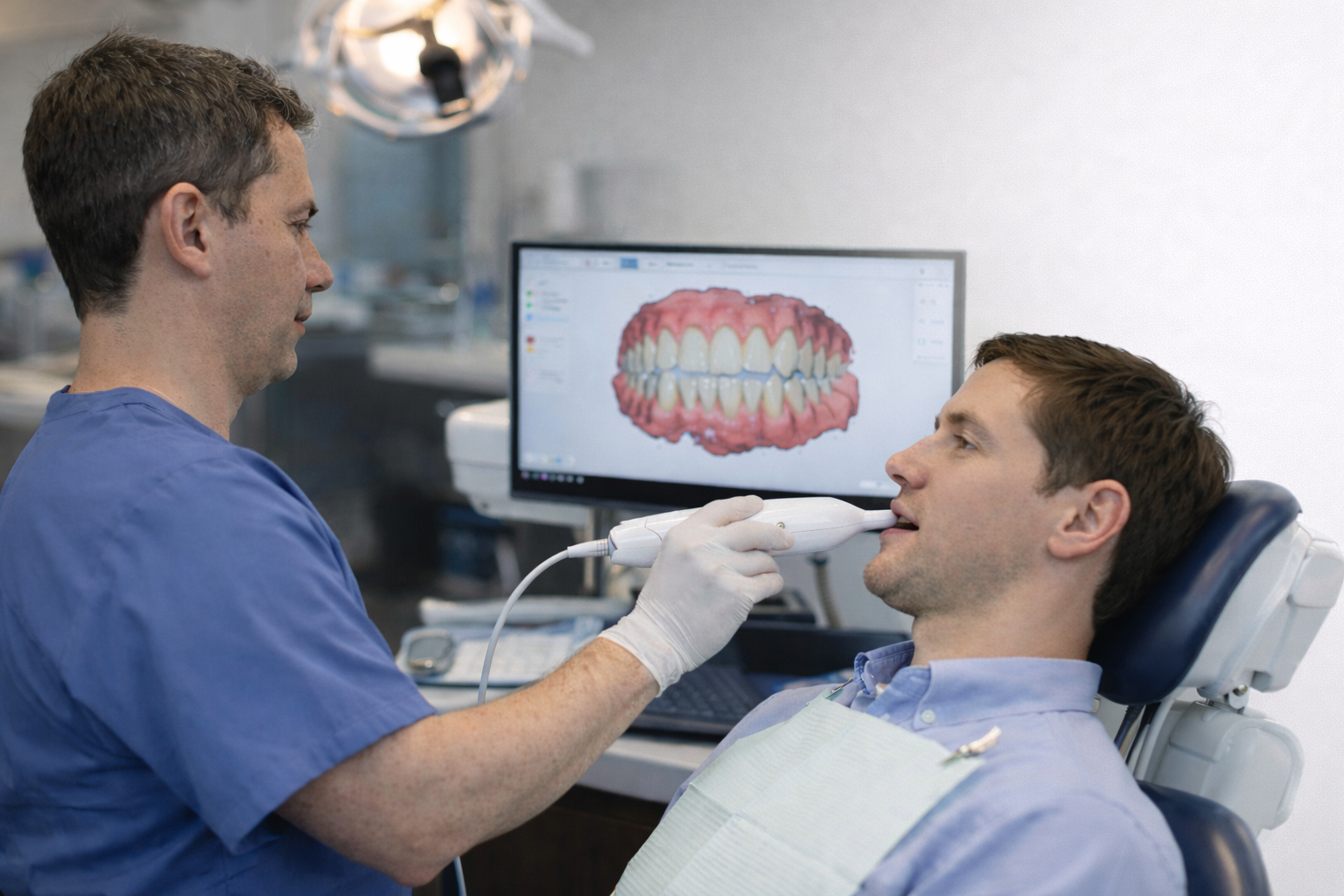
A small handheld scanner creates a precise 3D digital map of your mouth in minutes. No trays, no putty, no gagging. Software designs the restoration, and in many cases it is ready the same day — while you wait.
Modern Technologies Used in Clinics
Tools shaping your experience
Modern clinics now use a range of interconnected technologies that work together to improve every step of your treatment.
| Technology | What it does for you |
|---|---|
| Intraoral Scanner | A small wand captures thousands of images per second to build a precise 3D model of your teeth — no messy molds, no gagging. |
| Cone Beam CT (3D X-ray) | Produces detailed 3D images of your jaw, roots, and nerves — far more informative than traditional flat X-rays and with greater safety. |
| CAD/CAM Milling | Computer-aided design and manufacturing creates crowns, veneers, and bridges in-house — often within a single hour. |
| Digital X-rays | Instantly produce crystal-clear images with up to 90% less radiation than traditional film X-rays. |
| Smile Design Software | Preview and approve how veneers or alignment treatments will look on your actual face before anything is done. |
| Laser Dentistry | Lasers treat gum disease, remove decay, and perform procedures with minimal bleeding and faster healing. |
Benefits for Patients
What this means for you
- Less pain and discomfort.Digital scanners eliminate impression trays that trigger gag reflexes. Laser tools reduce the need for drills and stitches. Many procedures that once required anaesthesia are now far more tolerable.
- Faster treatments.What previously took two or three separate appointments can often be completed in a single visit. Same-day crowns, instant digital records, and in-house milling mean you spend less time in the chair.
- Better accuracy and outcomes.Digital impressions have error rates far lower than manual ones. 3D imaging lets your dentist plan implants, extractions, and orthodontics with submillimetre precision — reducing complications and the need for revisions.
- Transparency and trust.When your dentist can show you your own 3D scan on a screen and walk through the treatment plan visually, it builds understanding — and genuine confidence in the process.
Real-Life Examples
Seeing the difference in practice
SAME-DAY CROWNS
No more temporary crowns or two-week waits
With CAD/CAM technology, your dentist scans your tooth, designs a perfect-fit ceramic crown digitally, mills it on-site, and bonds it in place — all within a single appointment. There is no temporary crown, no return visit, and no lab delays.
DIGITAL IMPRESSIONS FOR ALIGNERS
Goodbye to putty trays forever
Orthodontic treatment used to begin with uncomfortable trays filled with putty pressed against your teeth. Today, a quick intraoral scan takes around five minutes and gives the lab a more accurate model than any physical impression could. Your clear aligners are designed and manufactured directly from that digital file.
DIGITAL SMILE DESIGN
See your new smile before committing
Planning veneers or a smile makeover? Software overlays the proposed changes onto photos or 3D scans of your face so you can see the result before a single tooth is touched. Adjustments are made digitally — not on you.
Is Digital Dentistry Safe?
Tried, tested, and trusted
Digital dentistry is not experimental — these technologies have been developed, clinically tested, and refined over decades. They are regulated by dental and medical authorities worldwide and are used by millions of patients every year.
- Digital X-rays emit significantly less radiation than traditional X-rays — making routine imaging safer and more frequent when needed.
- Intraoral scanners are non-invasive, non-contact devices that are thoroughly sterilised between patients.
- CAD/CAM-milled ceramic restorations are made from materials with a long track record of biocompatibility and durability.
- All digital systems are operated by trained dental professionals — the technology assists expertise, it does not replace it.
Conclusion
Your next visit, reimagined
Digital dentistry is not a distant promise — it is happening right now in modern clinics. From the moment you open wide for a scan to the moment you leave with a same-day restoration, technology is working to make your experience genuinely better.
Whether you are anxious about dental visits, pressed for time, or simply want the best care available, choosing a digitally equipped practice is one of the most meaningful decisions you can make for your oral health.

