


Product overview
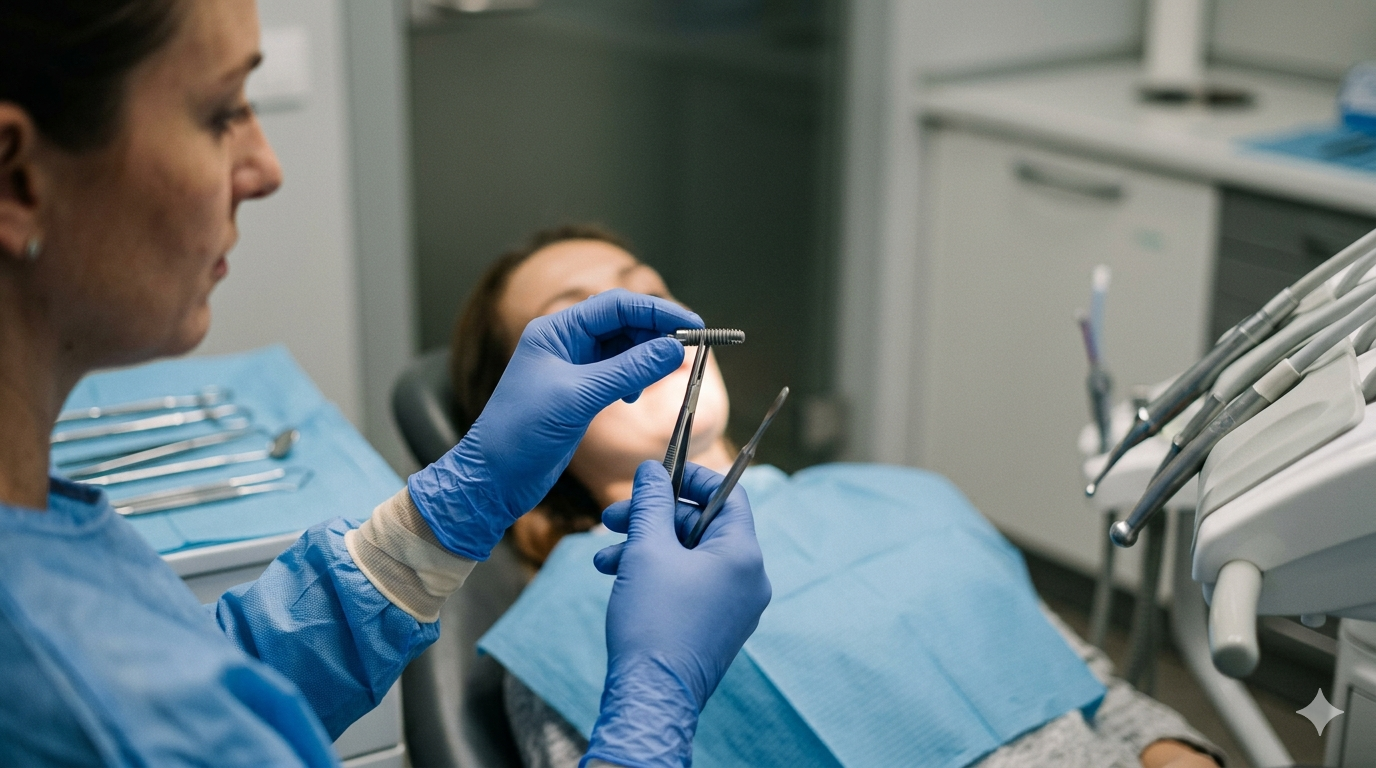
A dental implant is a small titanium post surgically placed into the jawbone to act as an artificial tooth root. Once the implant fuses with the bone through a natural process called osseointegration, a custom abutment and crown are attached on top — creating a permanent, fully functional replacement tooth that looks, feels, and performs exactly like a natural one.
Dental implants are widely regarded as the gold standard for replacing missing teeth. Unlike bridges or dentures, implants do not rely on adjacent teeth for support — they integrate directly into the jawbone, preserving bone density and facial structure for the long term.
Permanent & stable
Titanium fixture bonds directly to the jawbone – no slipping, no adhesives, no removal needed.
Preserves jaw bone
Implants stimulate bone growth and prevent the bone loss that occurs after tooth extraction.
Natural look & feel
Custom zirconia crown shade-matched to your teeth — completely indistinguishable from natural.
What is a dental implant?
Definition & concept
A dental implant is a surgically implanted artificial tooth root made from medical-grade titanium (or zirconia). It is placed directly into the jawbone where a natural tooth root once existed. Over a period of 3–6 months, the bone grows around and fuses to the titanium surface — a process called osseointegration — anchoring the implant as firmly as a natural root.
Once fully integrated, a connector piece called an abutment is attached to the implant, and a custom crown (the visible tooth) is secured on top. The result is a three-part system that replaces every component of a natural tooth — root, neck, and crown.
Why choose an implant over other options?
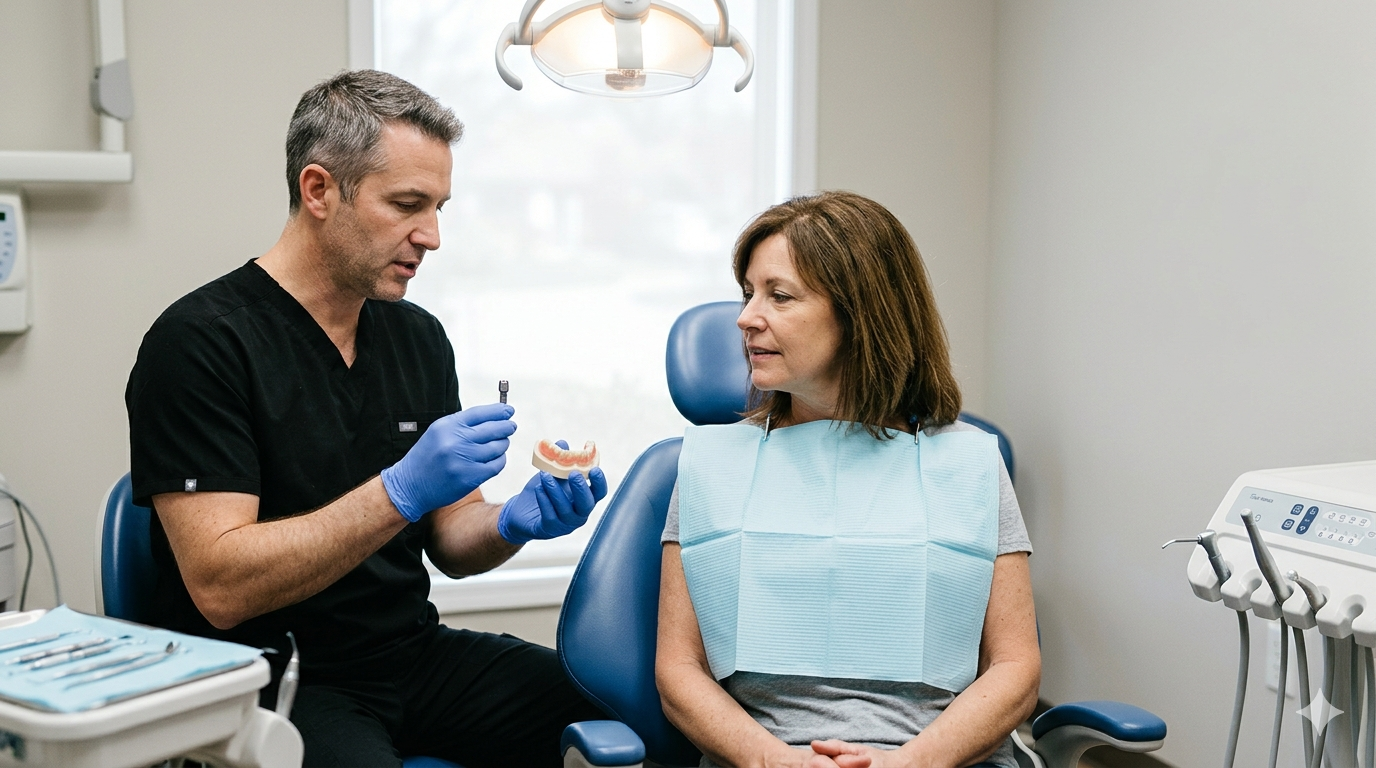
When a tooth is lost, patients have three primary replacement options: a dental bridge, a removable denture, or a dental implant. Here is why implants are considered the superior long-term solution:
- No impact on adjacent teeth : bridges require grinding down healthy neighbouring teeth; implants do not
- Bone preservation : implants are the only tooth replacement that stimulates the jawbone, preventing bone loss
- Permanent solution : with proper care, the titanium fixture can last a lifetime
- Better oral hygiene : implants are cleaned like natural teeth; no special tools or removal required
- Natural bite force : implants restore approximately 90% of natural chewing force, unlike dentures (20–30%)
Types of dental implants
Implants vary by material, design, and application. Your oral surgeon or implantologist will recommend the most suitable type based on your bone density, jaw anatomy, and treatment goals.
Endosteal implant
The most common type. A titanium screw is placed directly into the jawbone. Supports single crowns, bridges, or full-arch restorations.
Best for: Most patients with adequate bone
Subperiosteal implant
A metal frame placed under the gum but on top of the jawbone. Used when there is insufficient bone depth for a standard endosteal implant.
Best for: Low bone volume patients
Zygomatic implant
Extra-long implants anchored into the cheekbone (zygoma) rather than the jawbone. Used in severe upper jaw bone loss cases.
Best for: Severe maxillary bone loss
All-on-4 / All-on-6 implants
A full arch of teeth supported by just 4 or 6 strategically placed implants. A complete teeth-in-a-day solution for patients with multiple missing teeth or failing dentition.
Cost: $12,000–$25,000 per arch
Mini dental implants (MDI)
Narrower diameter implants for patients with limited bone width or used to stabilise lower dentures. Less invasive procedure with faster healing.
Cost: $500–$1,500 per implant
Key features & specifications
| Feature | Detail |
|---|---|
| Product name | Dental Implant - Endosteal Titanium System |
| Implant material | Grade IV / Grade V Titanium, or Zirconia (metal-free) |
| Abutment material | Titanium, zirconia, or gold alloy |
| Crown material | Zirconia, PFM, or e.max ceramic |
| Implant diameter | 3.3 mm – 5.0 mm (standard & wide platform) |
| Implant length | 6 mm – 16 mm (bone depth dependent) |
| Surface treatment | SLA (sandblasted, large-grit, acid-etched) for osseointegration |
| Shade system | VITA Classical A1–D4 / VITA 3D-Master (for crown) |
| Success rate | 95–98% at 10 years |
| Osseointegration time | 3–6 months (upper jaw); 2–4 months (lower jaw) |
| Biocompatibility | ISO 10993-certified, FDA 510(k) cleared |
| Warranty | Lifetime warranty on titanium fixture (manufacturer defect) |
Procedure - step by step
What happens during implant treatment?
The dental implant process typically spans 3–9 months from the initial consultation to the final crown. Here is a complete walkthrough of every stage:
1. Initial consultation & 3D CBCT scan
Your implantologist evaluates your oral health, bone density, and anatomy using a cone beam CT scan. They confirm candidacy and create a personalised implant treatment plan.
2. Tooth extraction (if required)
If the failing tooth is still present, it is removed. In some cases an implant can be placed immediately at the same appointment (immediate implant placement).
3. Bone grafting (if required)
If bone volume is insufficient, a bone graft is placed to build up the site. This adds 3–6 months of healing time before the implant can be placed.
4. Implant fixture placement (surgery)
Under local anaesthesia (or sedation), a small incision is made in the gum. A precision drill creates a channel in the bone, and the titanium implant post is screwed into place. The gum is sutured closed.
5. Osseointegration - healing period
Over 3–6 months, the jawbone naturally grows around and fuses to the implant surface. During this time a temporary crown or flipper may be provided for aesthetics.
6. Abutment placement
Once the implant has fully integrated, a small connector piece (abutment) is attached to the top of the implant. The gum tissue is shaped to form a natural emergence profile around it.
7. Impression & crown fabrication
A digital scan or impression is taken of the abutment and surrounding teeth. A custom zirconia crown is milled in the lab and shade-matched to your natural teeth.
8. Final crown placement & review
The permanent crown is attached to the abutment and checked for fit, bite, and aesthetics. A follow-up appointment at 2–4 weeks confirms healing and occlusion.
Care & maintenance
How to care for your dental implant
The titanium implant fixture, if properly maintained, can last a lifetime. The crown typically lasts 10–20 years before replacement may be needed. Follow these guidelines to protect your implant:
Daily hygiene
- Brush twice daily with a soft-bristle toothbrush - angle the brush slightly toward the gumline around the implant
- Floss daily using implant-specific floss or an interdental brush to clean around the implant base
- Use a water flosser (oral irrigator) to flush bacteria from around the implant crown margin
- Rinse with an antimicrobial mouthwash - helps prevent peri-implantitis (gum infection around implant)
Lifestyle habits
- Do not smoke - smoking significantly increases implant failure risk and slows healing
- Avoid chewing very hard foods (ice, hard candy, pen caps) directly on the crown
- Wear a night guard if you grind your teeth - bruxism can damage the implant crown over time
- Limit alcohol during the healing/osseointegration period
Professional maintenance
Visit your dentist every 6 months for professional cleaning and implant health checks. Your dentist will assess the implant’s stability, check for any signs of peri-implantitis, and take periodic X-rays to monitor bone levels around the fixture.
Frequently asked questions
1. Is the dental implant procedure painful?
Ans. The surgery is performed under local anaesthesia, so you will feel no pain during the procedure. Post-surgical soreness, mild swelling, and bruising are normal and typically subside within 3–5 days. Most patients describe the discomfort as less than they expected.
2. How long do dental implants last?
Ans. The titanium implant fixture is designed to last a lifetime with proper care. The crown on top typically lasts 10–20 years before it may need replacement due to wear. Regular dental visits and good oral hygiene are the biggest factors in long-term implant success.
3. Am I a good candidate for dental implants?
Ans. Most healthy adults with one or more missing teeth are candidates. Ideal candidates have adequate jawbone density, healthy gums, and no uncontrolled systemic conditions. Patients with diabetes, osteoporosis, or those who smoke can still receive implants but require careful evaluation. A CBCT scan will determine your suitability.
4. What is osseointegration and why does it take so long?
Ans. Osseointegration is the biological process by which the jawbone grows into and fuses with the titanium implant surface. It takes 3–6 months because bone remodelling is a slow, natural process. Rushing this phase would compromise the stability and long-term success of the implant.
5. What is the cost of a dental implant?
Ans. A single complete implant (fixture + abutment + crown) in the US typically costs $1,500–$3,500. Costs vary by provider, location, and whether bone grafting is needed. Most dental insurance plans provide limited implant coverage, though supplemental plans may cover a portion. Flexible financing is widely available.

