


Product overview
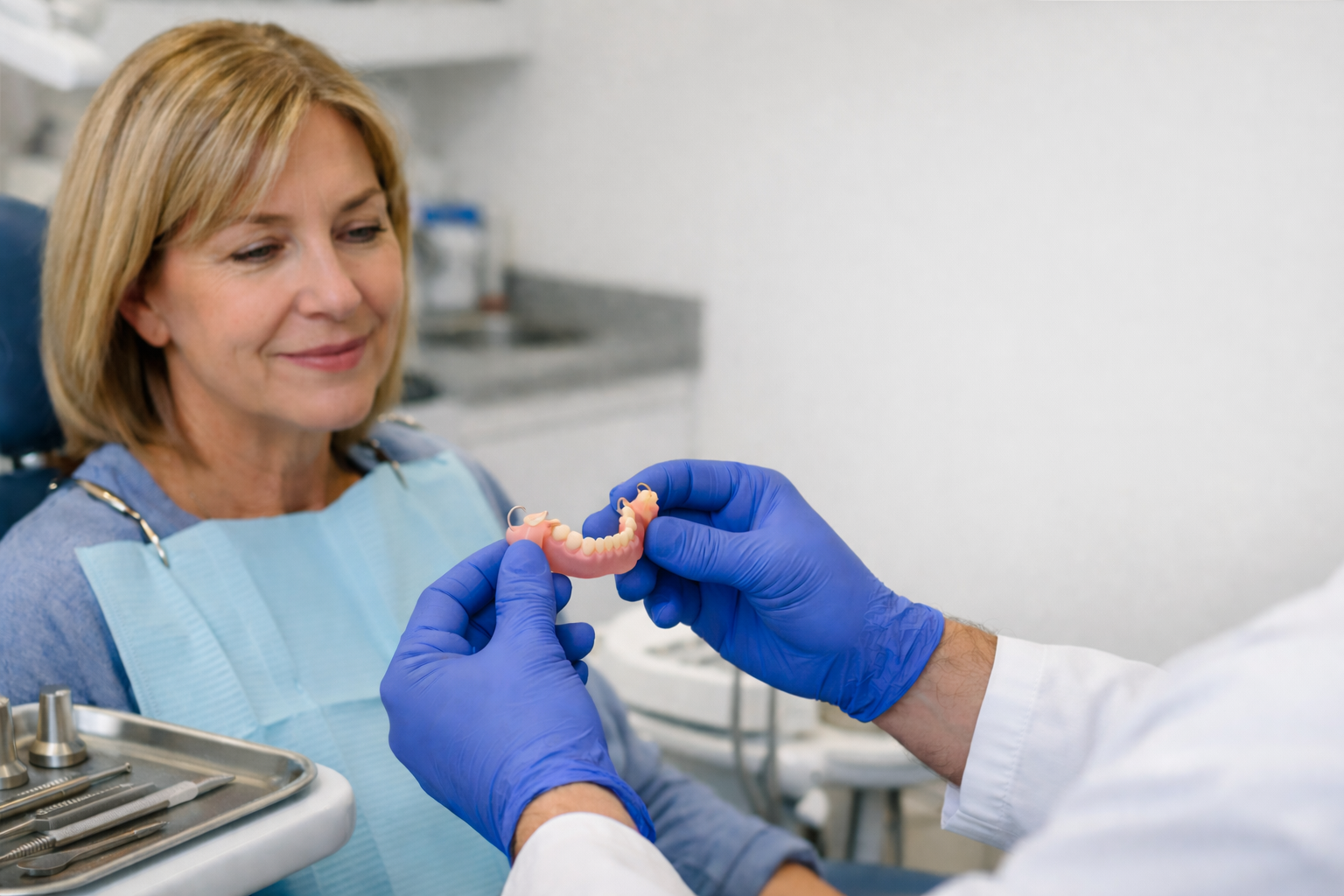
A removable dental prosthetic is a custom-made oral appliance that replaces missing teeth and surrounding gum tissue — and can be taken in and out of the mouth by the patient. Unlike fixed restorations such as crowns, bridges, or implants, removable prosthetics offer a non-surgical, cost-effective solution for patients who are missing several or all of their teeth.
Available in two main forms — complete dentures (replacing an entire arch of teeth) and partial dentures (replacing several missing teeth while natural teeth remain) — removable prosthetics are crafted from high-quality acrylic resin, flexible nylon, or a combination with a metal framework, all custom-fitted to match your unique oral anatomy and natural appearance.
Non-surgical solution
No implants, no drilling, no surgery — ideal for patients who cannot or prefer not to undergo invasive procedures.
Affordable & accessible
The most cost-effective tooth replacement option available, often covered partially by dental insurance plans.
Fully customised fit
Every prosthetic is fabricated to your exact oral impressions — natural shade, shape, and size matched to your face.
What are removable dental prosthetics?
Definition & concept
Removable dental prosthetics — commonly known as dentures — are oral appliances that sit on the gum ridge and, in the case of partial dentures, clip onto remaining natural teeth using metal clasps or precision attachments. They replace the visible crown of missing teeth and restore the appearance of natural gums using a flesh-coloured acrylic base.
Unlike fixed restorations, removable prosthetics are designed to be taken out each night for cleaning and soaking, allowing the gum tissue to rest and maintaining good oral hygiene around the appliance.

Who needs a removable dental prosthetic?
Removable prosthetics are recommended for patients who:
- Have lost all their teeth in one or both arches (complete edentulism) — full dentures replace the entire arch
- Have multiple missing teeth but retain some natural teeth — partial dentures fill the gaps
- Are not candidates for dental implants due to insufficient bone, systemic health conditions, or cost constraints
- Want a quick, non-surgical solution to restore chewing function, speech, and facial appearance
- Need an immediate temporary prosthetic while waiting for implant treatment or healing
Types of removable dental prosthetics
Removable prosthetics are available in several designs and materials. Your prosthodontist will recommend the best option based on the number of missing teeth, remaining natural teeth, bone condition, and budget.
Complete denture (full denture)
Replaces all teeth in the upper or lower arch. Rests on the gum ridge and is held in place by natural suction (upper) or denture adhesive. Suitable for fully edentulous patients.
Cost: $1,000–$3,500 per arch
Partial acrylic denture
Replaces several missing teeth using an acrylic base with metal clasps that grip remaining natural teeth for retention. The most affordable partial option.
Cost: $300–$1,500 per arch
Flexible partial denture (Valplast)
Made from a soft, flexible nylon resin with no metal clasps. More comfortable and aesthetically pleasing — the pink base blends with gum tissue naturally.
Cost: $700–$2,000 per arch
Cast metal (chrome cobalt) partial denture
A rigid metal framework with acrylic teeth and gum sections. The strongest and most precise partial denture — thinner, more comfortable, and longer-lasting than acrylic alone.
Cost: $1,000–$2,500 per arch | Life: 8–15 yrs
Immediate (temporary) denture
Placed on the same day as tooth extraction. Allows the patient to leave with a prosthetic immediately, protecting healing tissue. Requires refitting or replacement as the gums heal and shrink over 6–12 months.
Cost: $800–$1,800 per arch
| Feature | Detail |
|---|---|
| Product category | Removable dental prosthetic — complete & partial dentures |
| Base material | Heat-cured acrylic resin (PMMA), flexible nylon, or chrome cobalt metal framework |
| Tooth material | Acrylic resin teeth or porcelain teeth (premium) |
| Retention method | Suction seal (complete), metal clasps, precision attachments, or implant-retained snaps |
| Shade system | VITA Classical shade guide — matched to patient's natural teeth or preference |
| Fabrication method | Custom-cast from patient impressions; CAD/CAM option available for digital dentures |
| Fit accuracy | Precision impression technique; multiple try-in appointments for bite & aesthetics |
| Number of visits | 4–6 appointments over 4–8 weeks |
| Adjustments included | Post-delivery adjustments included for 1–3 months |
| Relining / rebasing | Available — required every 3–5 years as gums change shape |
| Warranty | 1 year against manufacturing defects; adjustments included for 3 months |
Procedure - step by step
What happens during the denture fabrication process?
Getting a custom-fitted removable denture typically involves 4–6 appointments over 4–8 weeks. Here is a complete guide to the process:
1. Initial consultation & assessment
Your dentist or prosthodontist evaluates your oral health, remaining teeth, gum ridge condition, and bite. X-rays may be taken. They discuss which type of denture best suits your needs and explain the full process.
2. Tooth extractions (if required)
Any remaining teeth that need to be removed are extracted before or at the start of the denture process. If an immediate denture is chosen, it is fitted on the same day as extractions to avoid going without teeth.
3. Primary impressions
Preliminary impressions of your upper and lower arches are taken using alginate. These are used to create custom impression trays for the next step.
4. Final impressions & bite registration
Detailed final impressions are taken with a custom tray to capture precise details of the gum ridge. Wax bite blocks are used to record the correct vertical height and jaw relationship — this determines how your denture will sit and how your bite will function.
5. Wax try-in appointment
A wax trial denture with the selected teeth set into it is placed in your mouth. This visit checks the appearance, tooth shade, tooth shape, midline alignment, lip support, and bite. You can see how the final denture will look and request changes before fabrication is finalised.
6. Laboratory fabrication
The wax try-in is sent to the dental laboratory where the denture is processed — the acrylic base is heat-cured, the teeth are set, and the prosthetic is finished and polished to a smooth, natural-looking surface.
7. Fitting & delivery appointment
The completed denture is fitted in your mouth. Your dentist checks the fit, bite, and appearance and makes chairside adjustments. You receive instructions on how to insert, remove, and clean the prosthetic.
8. Follow-up adjustment visits
Most patients need 1–3 follow-up appointments in the first few weeks as sore spots develop and the gum tissue adapts. These adjustments are included in the treatment fee and are a normal part of the process.
Care & maintenance
How to care for your removable denture
With proper daily care, a quality denture can last 5–10 years before relining or replacement is needed. Following a consistent care routine is essential for hygiene, comfort, and longevity.
Daily cleaning routine
- Remove the denture after every meal and rinse it under running water to remove food debris
- Brush the denture twice daily using a soft denture brush and non-abrasive denture cleaner — never regular toothpaste, which scratches acrylic
- Clean your gums, tongue, and palate each morning with a soft toothbrush before inserting the denture
- If you have remaining natural teeth, brush and floss them thoroughly as normal
Overnight soaking
- Remove the denture every night and soak it in a denture cleaning solution or plain cold water
- Never soak in hot water — this can warp the acrylic base and ruin the fit
- Allow the gum tissue to rest overnight — this reduces soreness and promotes healthy circulation
Handling & storage
- Always handle dentures over a folded towel or basin of water — they break easily if dropped
- Store in a denture case with soaking solution when not in use
- Never wrap in a tissue or paper towel — dentures are frequently lost or accidentally thrown away this way
Professional maintenance
Visit your dentist every 6–12 months for a professional denture inspection and gum check. Your dentist will assess whether a reline (adding material to the fitting surface) is needed as your gum ridge shrinks with age — this keeps the denture fitting snugly and comfortably.
Frequently asked questions
1. How long does it take to get used to wearing dentures?
Ans. Most patients adapt within 4–8 weeks. During this time, speech may feel slightly different, some soreness is normal, and eating certain foods may take practice. Your brain and muscles gradually learn to hold and use the denture naturally. Follow-up adjustment visits during this period make the process significantly more comfortable.
2. Do I have to remove my dentures at night?
Ans. Yes — removing dentures nightly is strongly recommended by dental professionals. This allows gum tissue to rest and receive normal stimulation from the tongue and saliva. Wearing dentures 24 hours a day accelerates bone resorption and increases the risk of gum infections and fungal conditions like denture stomatitis.
3. Will my dentures look natural?
Ans. Yes. Modern dentures are crafted with individually shade-matched acrylic teeth that closely mimic the size, shape, and colour of natural teeth. The gum-coloured acrylic base is tinted to match your natural tissue tone. A skilled prosthodontist pays attention to tooth arrangement and facial anatomy to ensure a completely natural, age-appropriate appearance.
4. How much do removable dentures cost?
Ans. Costs range significantly by type. Partial acrylic dentures start from $300–$1,500 per arch. Flexible partials cost $700–$2,000. Complete full dentures range from $1,000–$3,500 per arch. Cast metal partial dentures cost $1,000–$2,500. Premium options including digital dentures or implant-retained dentures cost more. Many dental insurance plans cover 50% of denture costs.
5. What is denture relining and when is it needed?
Ans. A reline is the process of adding new acrylic material to the fitting surface of the denture to compensate for changes in the shape of the gum ridge. The jawbone and gum tissue naturally shrink after tooth loss, causing dentures to become loose over time. Relining is typically needed every 3–5 years and can be done chairside (soft reline) or in the laboratory (hard reline).

